

As one of the series of events celebrating the 26th anniversary of Macau University of Science and Technology, the University Anniversary Special Session 1 was successfully held on the morning of 26 March 2026 at Block D Conference Hall of MUST. The session was delivered by Professor Tang Benzhong, Member of the Chinese Academy of Sciences, Fellow of The World Academy of Sciences for the advancement of science in developing countries (TWAS), Dean of the School of Science and Engineering at The Chinese University of Hong Kong, Shenzhen, and 2026 Honorary Doctor of MUST. He delivered a cutting-edge academic report entitled "Aggregatism: Seeing the Forest, then to the Trees", presenting a feast of knowledge with both intellectual depth and academic excellence to teachers and students of the university.
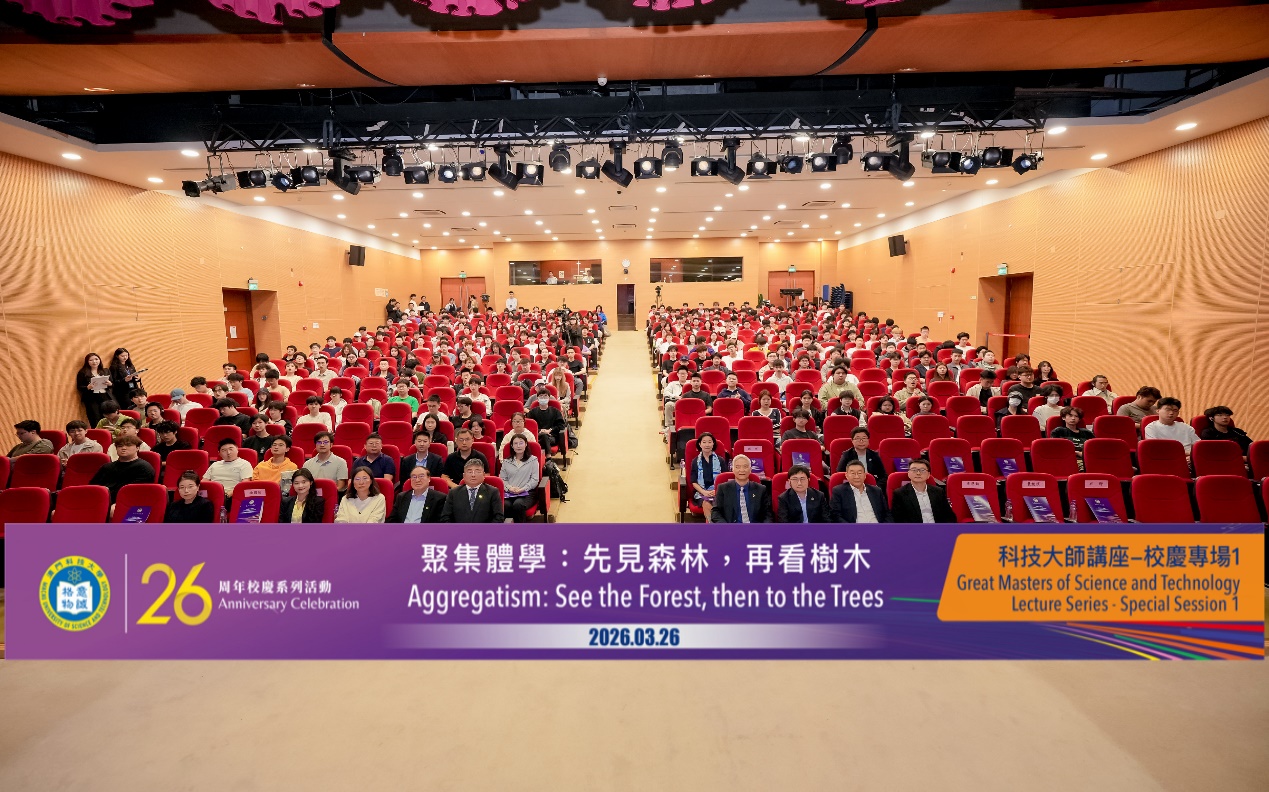
Group Photo
Distinguished guests attending the lecture included Professor Xu Ao’ao, Honorary President of MUST, Professor Zhu Yizhun, Vice President of MUST, Professor Chen Yong, Vice President of MUST and Professor Li Shutang, Director of the Department of Materials Science and Engineering, Faculty of Innovation Engineering. More than 300 anniversary guests, teachers and students of the university also attended the event.
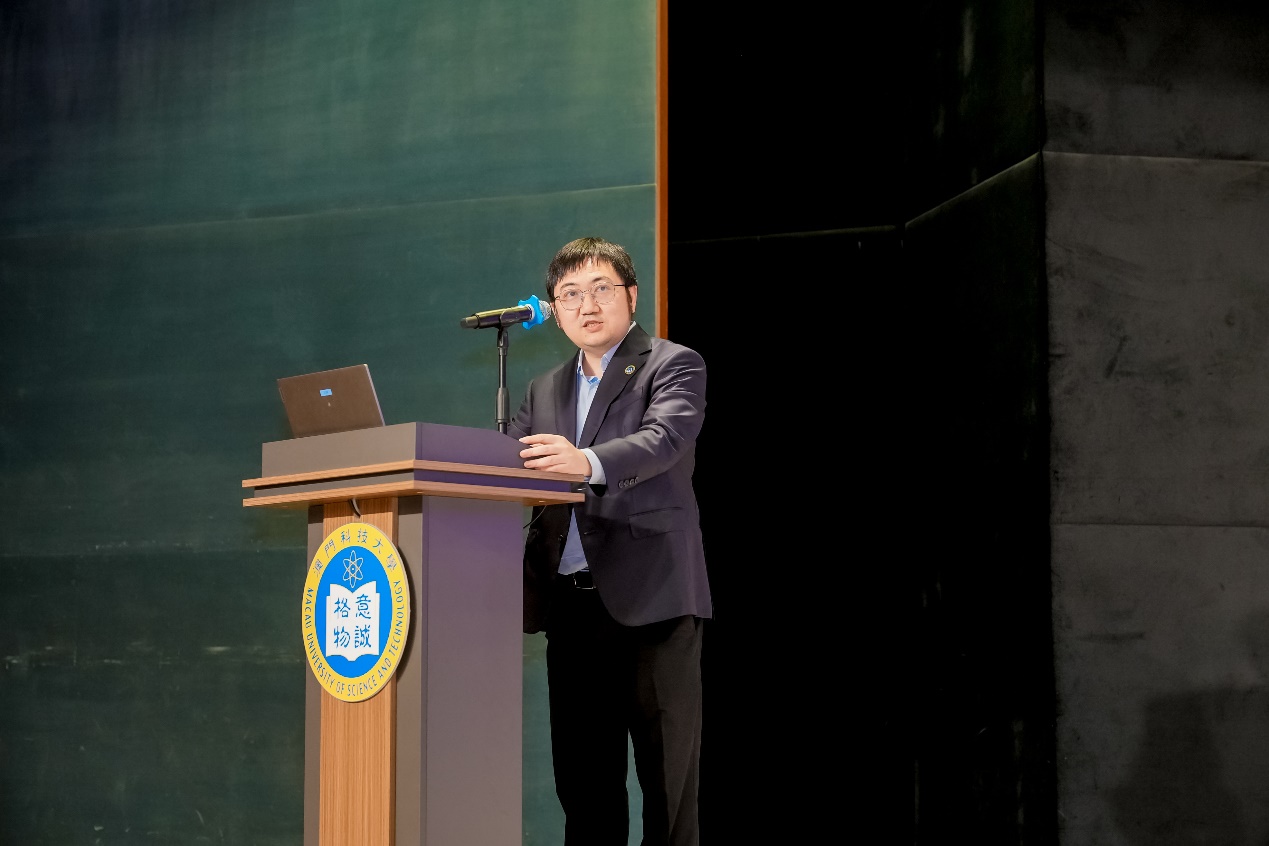
Vice President Professor Chen Yong delivered a speech
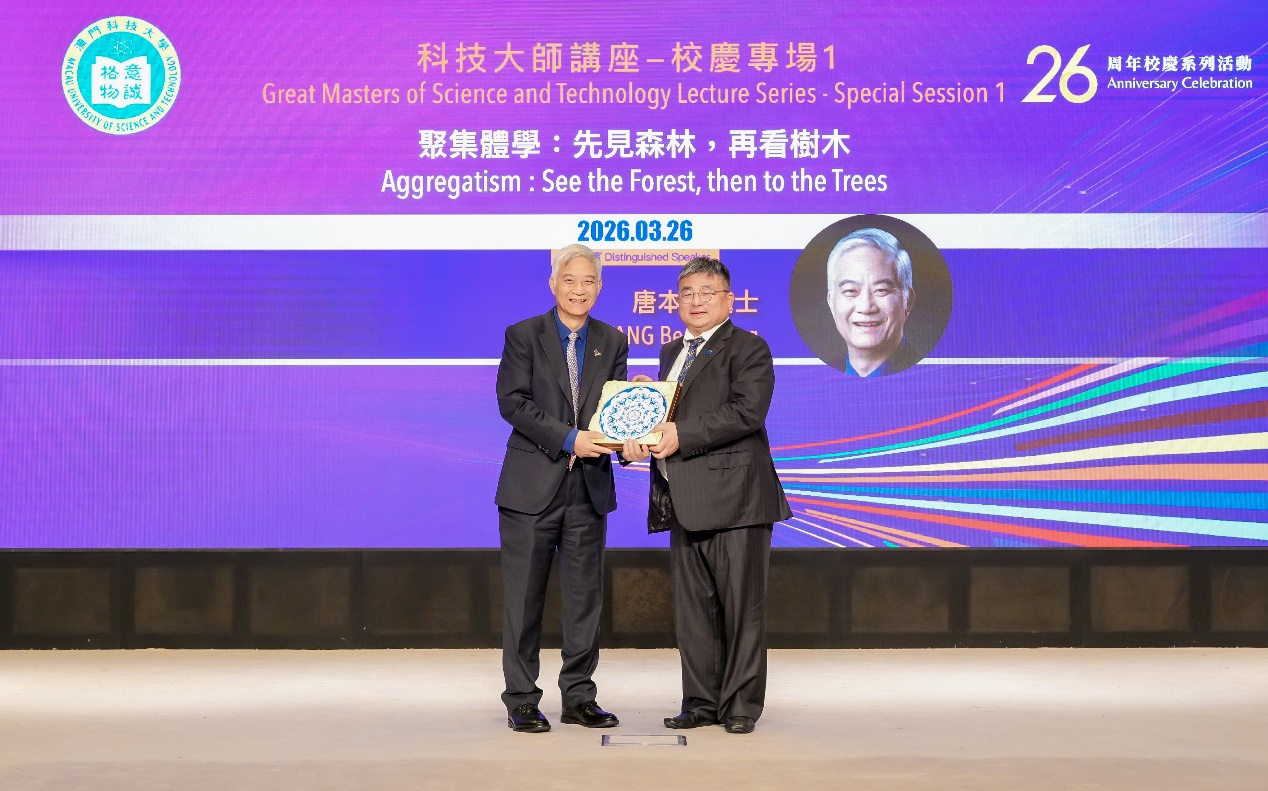
Vice President Professor Zhu Yizhun (right) presented a souvenir to Professor Tang Benzhong (left).
At the beginning of the lecture, Vice President Professor Chen Yong delivered a welcome speech on behalf of the university. He extended a warm welcome and sincere gratitude to Professor Tang Benzhong for his presence and lecture. Professor Chen reviewed MUST’s 26 years of development, during which the university has rooted itself in Macau, served the Guangdong-Hong Kong-Macao Greater Bay Area, and committed itself to higher education and scientific research. He emphasized that the series of academic activities for the university’s anniversary serve as an important platform for MUST to inherit its academic spirit, align with international cutting-edge research, and cultivate innovative talents. He also expressed his hope that all faculty and students would draw wisdom from Professor Tang’s sharing, establish a holistic research mindset, and strive to scale new heights in scientific exploration.
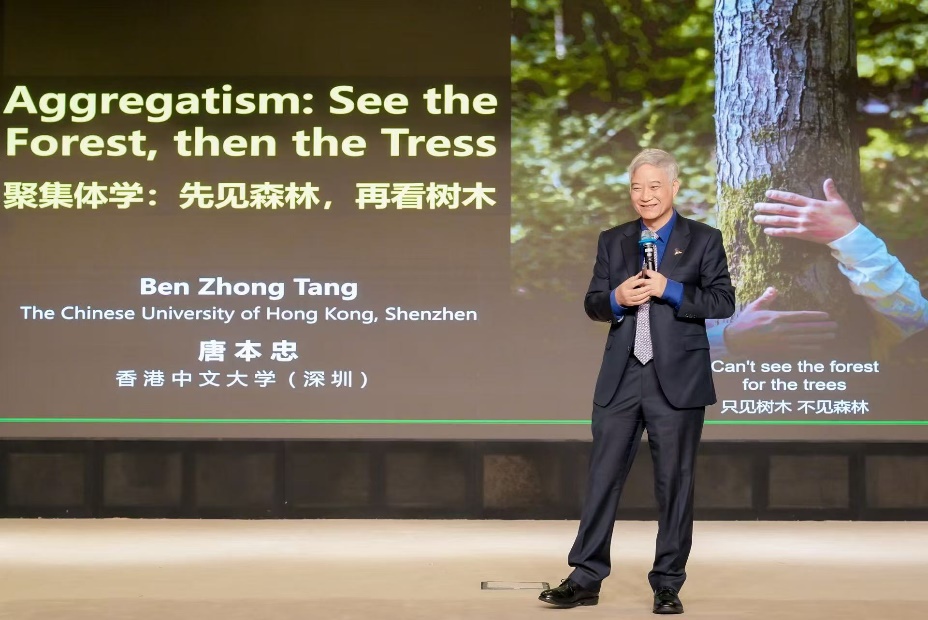
Professor Tang delivered a lecture
Professor Tang is a leading scholar in the international fields of chemistry and materials science, as well as the founding figure and pioneer of Aggregation-Induced Emission (AIE) research. With profound academic attainments and remarkable research achievements, he has dedicated decades to studies in materials science, polymer chemistry, biomedical diagnostics and therapeutics. To date, he has published more than 2,600 academic papers with over 244,000 total citations and an h-index of 217, and owns more than 100 authorized patents.
He has been conferred numerous prestigious awards, including the First Class National Natural Science Award of China, the Ho Leung Ho Lee Foundation Prize for Scientific and Technological Progress, and the Guangdong Provincial Science and Technology Contribution Award. Since 2014, he has been consecutively selected as a Highly Cited Scientist in both Materials Science and Chemistry fields worldwide, enjoying an outstanding reputation in the global academic community.
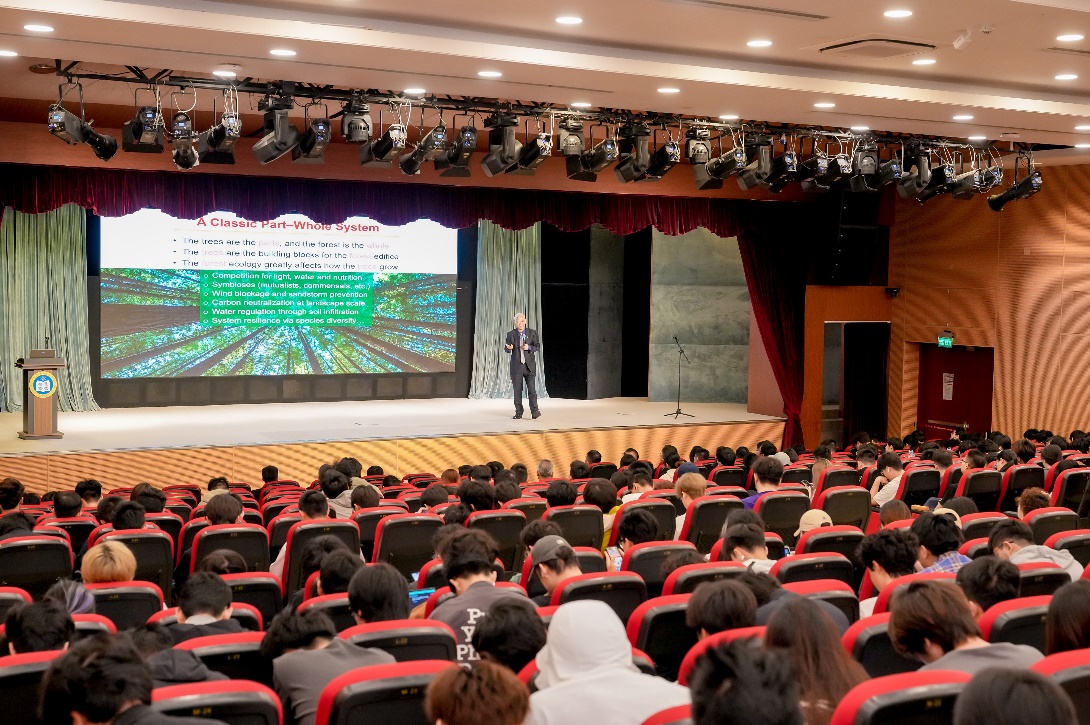
The lecture
In his lecture, Professor Tang broke through the framework of traditional scientific research thinking and delivered an in-depth interpretation of Aggregatism, a cutting-edge research paradigm that transcends the long-standing limitations of molecular-centric modern science. He noted that while modern science has achieved extraordinary progress based on molecular theory, many critical phenomena in the real world occur at the aggregate level — ordered systems formed by molecular assembly, whose overall properties are often distinctly different from those of individual molecules.
Accordingly, he proposed Aggregate Theory as the core research paradigm for aggregate science, shifting the research focus from single molecules to aggregate systems to better understand and address the phenomena of "disappearance" and "emergence" in complex systems.
Taking his original and groundbreaking discovery of Aggregation-Induced Emission (AIE) as a typical example, Professor Tang vividly illustrated the emergent properties at the aggregate level: non-luminescent single molecules can emit intense light upon aggregation, a disruptive finding that has completely rewritten traditional luminescence theories. He further extended this research perspective to other emerging emergent systems, including Room-Temperature Phosphorescence (RTP), Circularly Polarized Luminescence (CPL), Mechanoluminescence (ML), and Clusteroluminescence (CL).
Using cluster luminescence as a case study, he elaborated on the effects of through-space interactions and molecular arrangement on luminescence performance, providing solid theoretical support for the predictable development of new emergent systems.
Based on decades of research practice, Professor Tang also proposed a practical two-way research framework: starting from aggregates, focusing on functional construction and application development upward, and tracing key interactions and organizational principles downward. This framework aims to make emergent behaviors easier to discover and more predictable, opening up new research paths for advanced materials design and the analysis of complex biological systems.
With the vivid metaphor of "seeing the forest first, then the trees", he encouraged the faculty and students present to maintain both a holistic perspective to grasp the direction of disciplinary development and a meticulous approach to tackle core scientific problems, uphold the spirit of originality, and bravely explore uncharted territories in scientific research.
Towards the end of the lecture, teachers and students actively raised questions and engaged in in-depth discussions with Professor Tang on topics including the application scenarios of Aggregatism, pathways for scientific innovation, and the growth of young scholars. Academician Tang responded to each question patiently and provided thoughtful guidance, creating a lively and interactive atmosphere. students remarked that the lecture was of high academic value and practical inspiration. It not only offered them a brand-new understanding of cutting-edge scientific research fields but also equipped them with methodological insights for academic exploration, providing strong guidance for their future studies and research work.

