


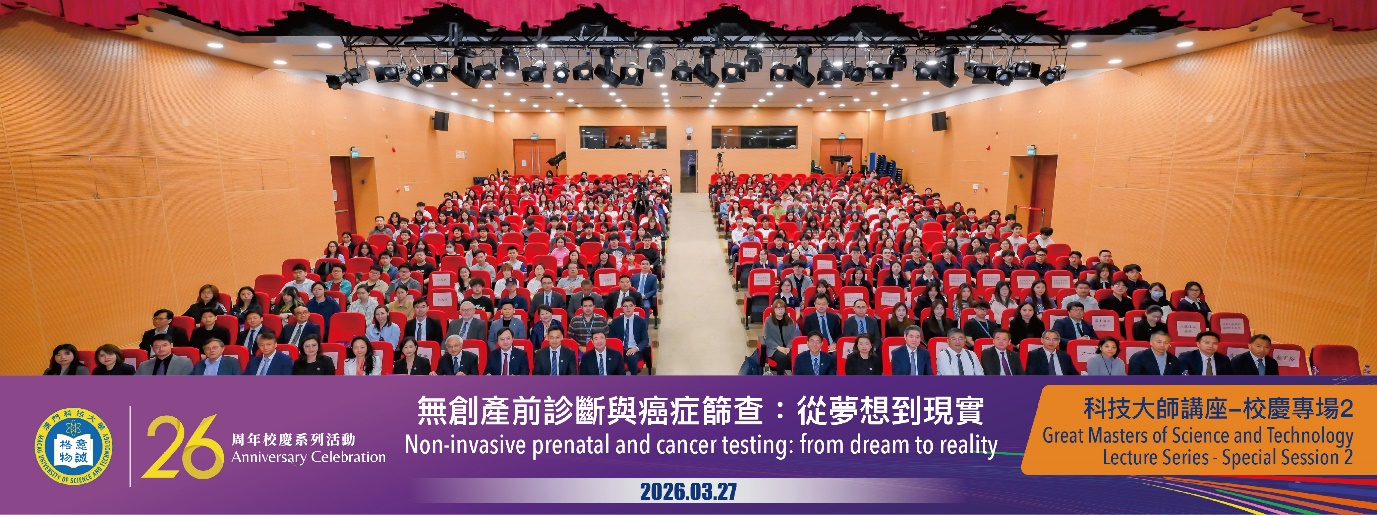
Group Photo
As one of the series of events celebrating the 26th Anniversary of the Macau University of Science and Technology, the University Anniversary Special Session 2 was successfully held in the morning of 27 March 2025 at Block D Conference Hall of MUST. The session was delivered by Professor Yuk Ming Dennis Lo, the Academician of the Chinese Academy of Sciences, Foreign member of the Academia Europaea, the President of the Chinese University of Hong Kong, Li Ka Shing Professor of Medicine of the Chinese University of Hong Kong, and 2026 Honorary Doctor of MUST. He delivered a distinguished lecture titled “Non-invasive prenatal and cancer testing: from dream to reality”.
Attending guests included the representatives of the universities, health institutions from China; universities in Hong Kong; local health institutions, enterprises, and associations in Macau; Chak Wan Liu, Chancellor of MUST, Jian-Kang ZHU, President of MUST; Joseph Hun Wei LEE, Chairman of University Council of MUST; Paul Kwong-Hang TAM, Vice President of MUST; Yi Zhun Zhu, Vice President of MUST; Council member of MUST, Members of MUST Advisory Committee, and representatives of faculties and institutes, teachers and students.
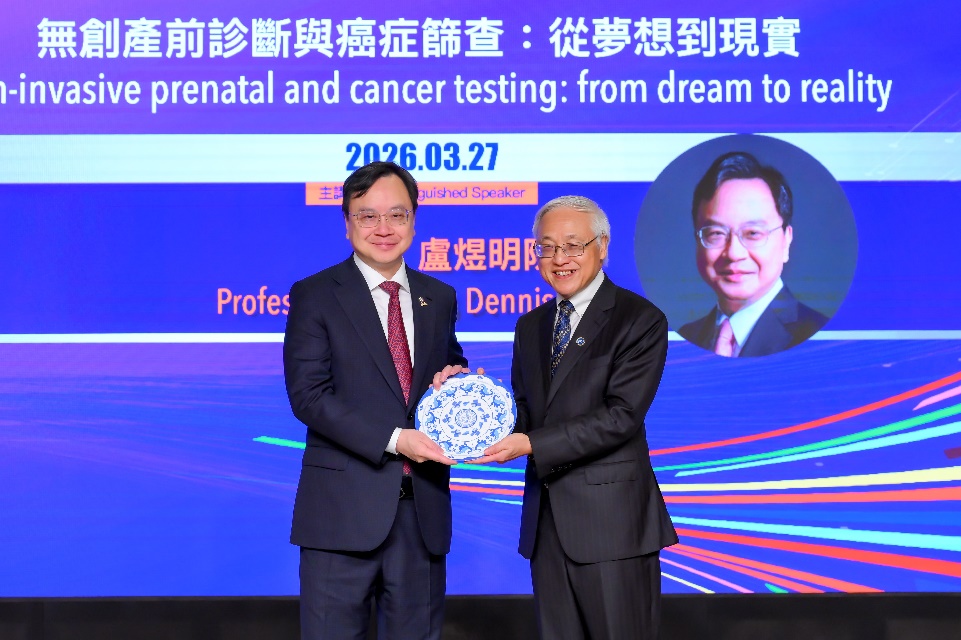
Vice President Paul Kwong-Hang TAM (right) presented a commemorative gift to Professor Yuk Ming Dennis Lo (left)
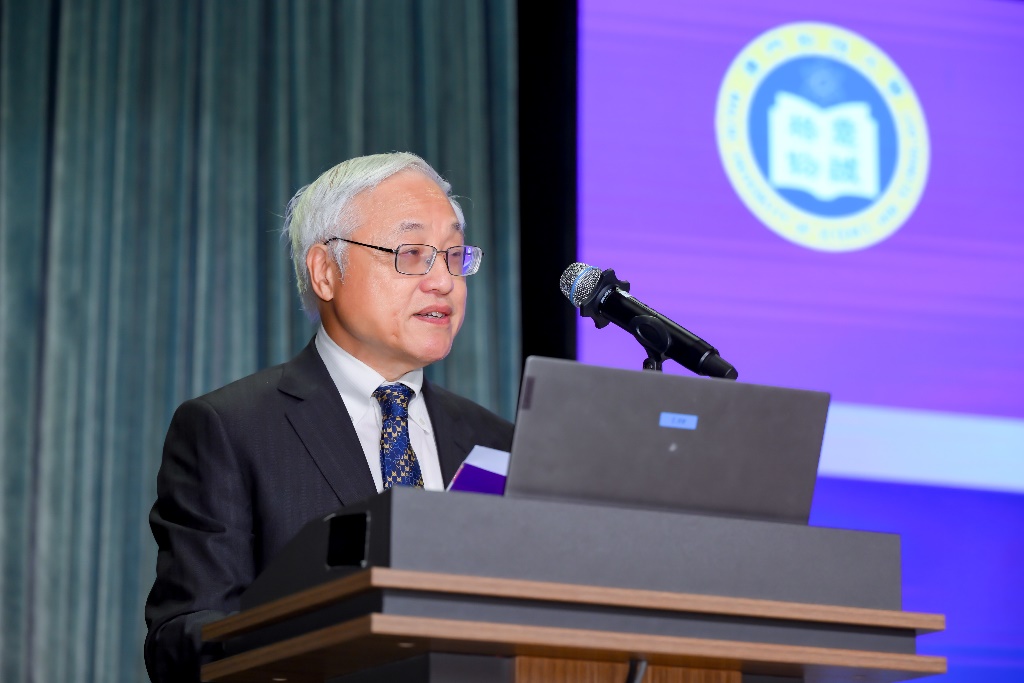
Vice President Paul Kwong-Hang TAM delivered an opening speech
Vice President Paul Kwong-Hang TAM delivered a speech on behalf of the university. On the occasion of the 26th Anniversary of the Macau University of Science and Technology, we are honored to invite Yuk Ming Dennis Lo, globally renowned as a pioneer, innovator, and leader in liquid biopsy, and is known as the "father of non-invasive prenatal testing" to deliver a distinguished lecture titled "Non-Invasive Prenatal Diagnosis and Cancer Screening: From Dream to Reality" to all faculty members and students. His visionary insights will really get us thinking more deeply and inspire us to explore new horizons of discovery.
Professor Lo has authored and co-authored more than 290 publications in leading international peer-reviewewd journals. His seminal contributions to non-invasive diagnostics, Professor Lo has received numerous prestigious honours. He received the 2014 King Faisal International Prize in Medicine; Coulter Lectureship Award in 2015. In 2016, Professor Lo was selected as the winner of the inaugural Future Science Prize in Life Science, which is regarded as China’s Nobel Prize. In the same year, he was named the Thomson Reuters Citation Laureate in Chemistry, an honour considered as a predictive index of the Nobel Prize. He was also the first Chinese recipient of the Fudan-Zhongzhi Science Award in 2019. In 2021, he received the Breakthrough Prize in Life Sciences, widely known as the “Oscars of Science”, and became the first Chinese scientist to receive the Royal Medal in biological sciences from the Royal Society of London. He received the 2022 Lasker–DeBakey Clinical Medical Research Award; the Future Science Prize in Life Sciences (China), widely regarded as the Chinese counterpart to the Nobel Prize. In 2023, he was elected as a member of the Chinese Academy of Sciences and received the inaugural Tengchong Science Award. In 2024, he became the first Chinese scholar to receive the prestigious Jiménez Díaz Lecture Award. In 2025, Professor Lo was awarded the Richard B. Johnston, Jr., MD Prize in Developmental Biology. He was also elected as a Foreign Member of Academia Europaea.
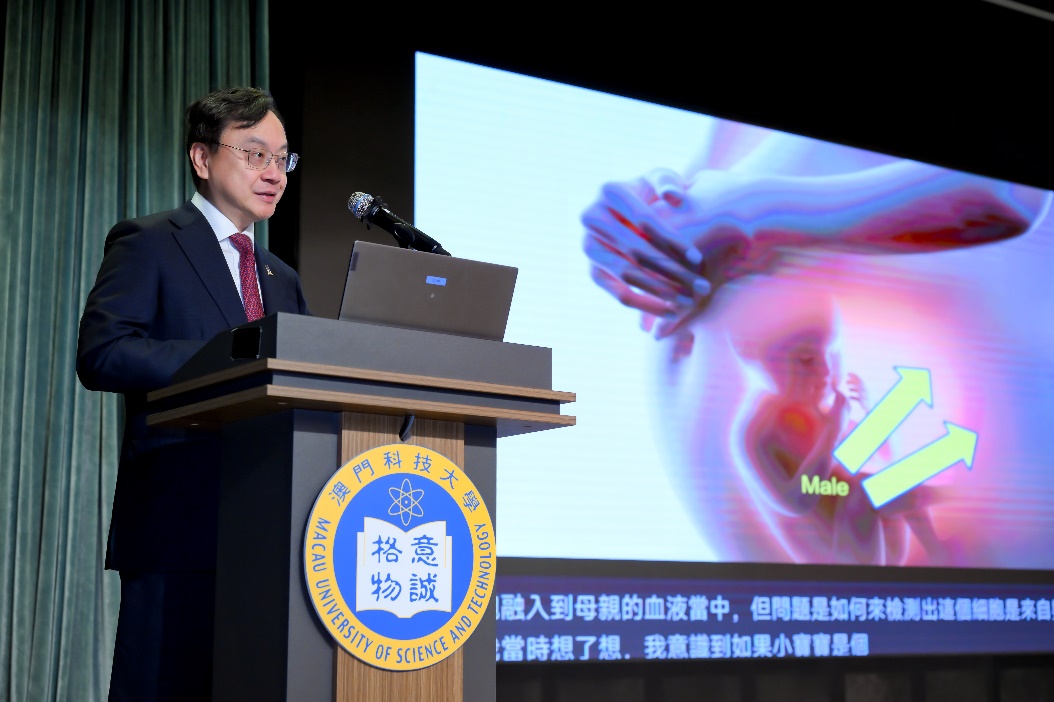
Professor Yuk Ming Dennis Lo
In the lecture, Professor Lo highlighted that the presence of cell-free fetal DNA in the plasma of pregnant women was first reported by his team in 1997, a finding published in “The Lancet”, which laid the foundation for non-invasive prenatal diagnosis and replaced traditional invasive procedures such as amniocentesis, which carried associated risks.
Professor Lo’s team have been pushing forward the translation of this discovery into a new platform of non-invasive prenatal testing (NIPT). NIPT is now used worldwide, allowing the non-invasive screening of fetal chromosomal abnormalities and single gene disorders. A similar technology has also been used for the detection, monitoring and prognostication of cancer. Using an epigenetic base approach, multiple types of cancer can be screened using a single blood test. In this talk, Professor Lo will talk about the journey through which this body of diagnostic technologies were developed and the challenges and impact in bringing such tests to the clinic.
Recognizing that fetal DNA constitutes only about 15% of the total cell-free DNA in maternal plasma (a “needle in a haystack” challenge), Prof. Lo’s team developed innovative solutions. In 2007 they introduced digital PCR, followed in 2008 by massively parallel genomic sequencing. These breakthroughs enabled highly accurate non-invasive prenatal testing (NIPT) for chromosomal aneuploidies such as Down syndrome. NIPT has now been performed more than 100 million times worldwide, transforming prenatal care globally.
Professor Lo further extended plasma DNA technology to oncology. Focusing on nasopharyngeal carcinoma (NPC), which is particularly prevalent in Hong Kong and southern China, his team pioneered screening using Epstein-Barr virus (EBV) DNA in plasma. A large-scale study of over 20,000 participants demonstrated that the method detects NPC at significantly earlier stages, dramatically improving progression-free survival. The landmark results were published in The New England Journal of Medicine in 2017.
Professor Lo’s work has not only advanced scientific understanding but has also achieved successful technology transfer to industry, benefiting patients worldwide. His lecture at MUST illustrated how persistent scientific curiosity can turn ambitious dreams into life-saving clinical reality.
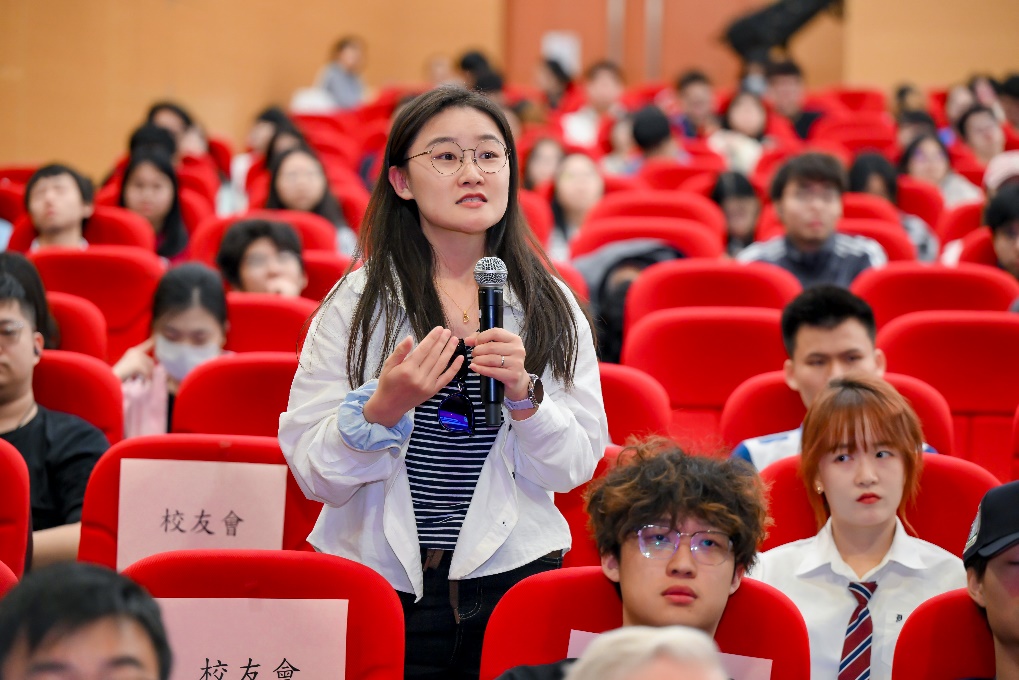
Q& A Session
During the Q&A session, A student asked Professor Lo where the inspiration for his ideas came from. Professor Lo said his cross-disciplinary clinical experience helped — it let him draw analogies between different fields and observations, and he encouraged students to apply insights from one area of medicine to others. A student also asked Professor Lo whether his research could eventually be used to perform prenatal correction and treatment for early fetal problems. Professor Lo's answer was affirmative and noted that some of his research has already shown potential for therapeutic application.

